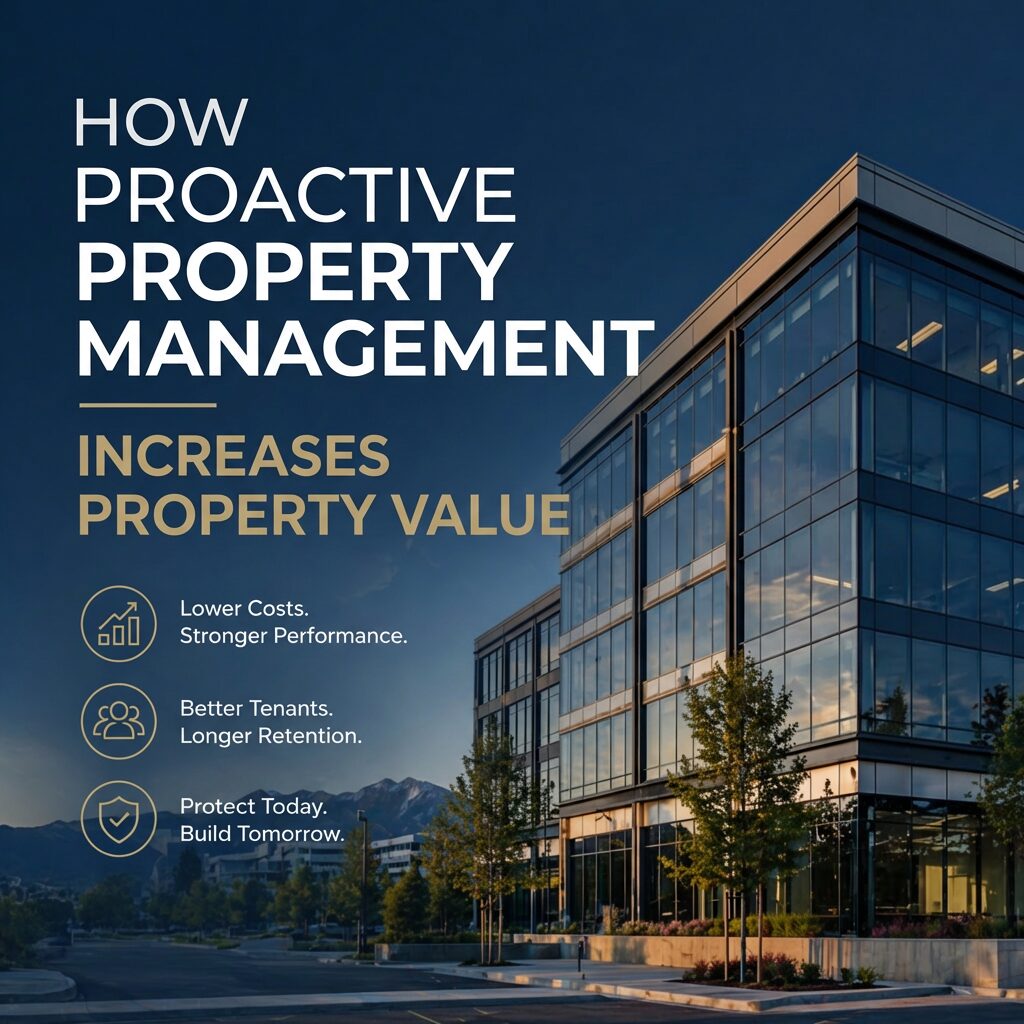
Not all property management creates value.
Some approaches maintain the status quo. Others actively improve performance over time.
The difference is proactive property management.
In today’s Salt Lake City commercial real estate market, that difference is becoming more noticeable. Rising operating costs, increasing tenant expectations, and aging buildings are all putting more pressure on property performance.
Owners who take a proactive approach are better positioned to protect and grow long-term value.
What Proactive Property Management Actually Means
Proactive property management goes beyond responding to issues as they arise.
It is a structured approach focused on:
- anticipating problems
- controlling operating costs
- improving long-term property performance
Instead of reacting to what goes wrong, proactive management focuses on what can be improved before issues escalate.
That shift has a direct impact on how a property performs over time.
5 Ways Proactive Property Management Increases Property Value
1. Controlling Operating Expenses
Operating expenses are one of the most important drivers of property performance.
Insurance, utilities, and vendor costs continue to fluctuate. Without active oversight, those expenses tend to increase over time.
Proactive property management focuses on:
- vendor negotiation
- contract review
- expense benchmarking
- identifying inefficiencies
Even small improvements in expense control can significantly increase net operating income, which directly impacts property value.
2. Improving Tenant Retention
Tenant turnover is one of the most expensive risks for property owners.
Downtime, leasing costs, tenant improvements, and lost revenue all impact performance.
Proactive management reduces turnover by focusing on:
- consistent tenant communication
- fast response times
- resolving issues early
- building strong tenant relationships
Most tenants do not leave because of one major issue. They leave due to repeated small frustrations. Addressing those early issues improves retention and stabilizes income.
3. Preventative Maintenance and Capital Planning
Many properties operate in a reactive maintenance cycle.
Something breaks, it gets fixed, and the cycle repeats.
Over time, this leads to higher costs and shorter system lifespan.
Proactive property management shifts this approach through:
- scheduled preventative maintenance
- long-term capital planning
- early identification of potential issues
This helps extend the life of building systems, reduce unexpected costs, and maintain the overall condition of the property.
In Salt Lake City, where many assets are aging, this is especially important.
4. Creating Financial Visibility
Clear financial reporting is critical to property performance.
Without visibility, it is difficult to make informed decisions.
Proactive management provides:
- consistent financial reporting
- budget vs. actual tracking
- clear expense categorization
This allows owners to identify trends, make adjustments early, and better understand how their property is performing.
Better data leads to better decisions.
5. Reducing Vacancy Risk
Vacancy is one of the largest risks to property value.
Proactive property management reduces this risk by:
- tracking lease expirations in advance
- starting renewal conversations early
- understanding tenant needs
- coordinating with leasing teams
Retaining tenants is often more valuable than replacing them. Stability supports consistent income, which strengthens overall property value.
Why This Matters in Salt Lake City
Salt Lake City’s commercial real estate market continues to evolve.
Operating costs are rising, tenant expectations are increasing, and many properties require more active oversight to remain competitive.
Across the market, owners are facing:
- increased expense pressure
- more competition for tenants
- aging infrastructure in certain submarkets
In this environment, reactive management creates risk. Proactive management creates a competitive advantage.
The Cost of Reactive Property Management
Reactive property management may appear manageable in the short term.
Over time, the impact becomes more noticeable:
- expenses increase without control
- maintenance costs compound
- tenant satisfaction declines
- vacancy risk rises
These issues develop gradually but can significantly affect long-term performance.
Why Proactive Management Directly Impacts Value
Property management is not just operational—it directly influences financial performance.
Proactive management improves efficiency, strengthens tenant relationships, and reduces risk across the asset. Over time, these small, consistent improvements compound and show up in stronger property performance and long-term value.
In a market like Salt Lake City, that difference is becoming more noticeable.
If you’re taking a closer look at how your property is performing, we’re always happy to share what we’re seeing across similar properties!