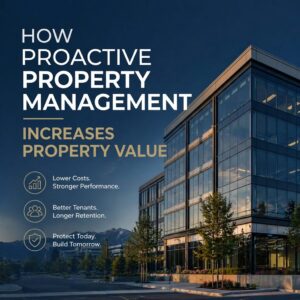
Seven ways to keep your commercial property performin at its best this summer.
Every season presents new opportunities—and new responsibilities—for commercial property owners.
Summer is often viewed as a quieter time for commercial real estate. The weather is cooperative, tenant activity shifts with vacations, and many businesses settle into a different rhythm. But behind the scenes, summer is one of the most important seasons for protecting a property’s long-term performance.
The work completed during these warmer months often determines how well a building performs throughout the rest of the year. It’s an opportunity to complete preventative maintenance, address deferred repairs, strengthen curb appeal, and plan improvements before winter weather returns.
Great property management isn’t about reacting when something fails. It’s about creating a plan that protects an owner’s investment before problems arise.
Here are seven areas every commercial property owner should prioritize this summer.
1. Service HVAC Systems Before Peak Demand
Utah summers place tremendous demand on HVAC equipment. Waiting until the first 100-degree day to discover a failing unit can result in uncomfortable tenants, emergency repair costs, and unnecessary downtime.
Routine preventative maintenance should include:
- Replacing filters
- Cleaning coils
- Checking refrigerant levels
- Inspecting belts and motors
- Verifying thermostat operation
Regular servicing not only extends equipment life but also improves energy efficiency and reduces the likelihood of costly emergency repairs.
2. Walk the Property With Fresh Eyes
It’s easy to overlook small issues when visiting the same property every week.
Summer is an excellent time to complete a comprehensive property walk with the perspective of a prospective tenant or investor.
Ask yourself:
- Does the landscaping look healthy?
- Is exterior lighting functioning properly?
- Are sidewalks, curbs, and parking areas in good condition?
- Is signage clean and visible?
- Are common areas welcoming and well-maintained?
Small details contribute significantly to a property’s overall perception and can influence tenant satisfaction and leasing success.
3. Inspect Roofs Before the Next Season
Winter snow, spring storms, and strong winds can leave behind damage that isn’t immediately visible.
A professional roof inspection during the summer can identify:
- Loose flashing
- Ponding water
- Membrane damage
- Clogged drains
- Minor leaks before they spread
Addressing these issues now is typically far less expensive than repairing interior damage later.
4. Prioritize Parking Lots and Exterior Improvements
Parking lots are one of the first things visitors experience.
Summer provides ideal conditions for:
- Crack sealing
- Asphalt repairs
- Seal coating
- Restriping parking stalls
- Repairing curbs
- Pressure washing sidewalks
These improvements not only enhance curb appeal but also reduce liability and extend the life of the property’s exterior surfaces.
5. Review Irrigation and Landscaping
Healthy landscaping communicates that a property is cared for.
Evaluate:
- Irrigation coverage
- Water efficiency
- Tree trimming
- Seasonal flowers
- Weed control
- Dead plant replacement
A proactive landscaping plan improves appearance while helping avoid unnecessary water waste and maintenance costs.
6. Plan Capital Improvements Early
Summer is often the best time to schedule projects such as:
- Roof replacements
- Exterior painting
- Lighting upgrades
- Common area renovations
- ADA improvements
- Building system upgrades
Planning these projects well in advance allows owners to secure qualified contractors, coordinate around tenant operations, and minimize disruptions.
7. Strengthen Relationships With Your Tenants
Protecting a property isn’t only about maintaining the building—it’s also about supporting the businesses inside it.
Summer provides excellent opportunities to connect with tenants through appreciation events, informal conversations, and regular communication.
A simple coffee morning, food truck lunch, or ice cream social can encourage connections between neighboring businesses while reinforcing that ownership and management are invested in the success of the property.
Strong tenant relationships often lead to improved communication, higher tenant satisfaction, longer lease renewals, and a stronger community overall.
Stewardship Is a Year-Round Commitment
Successful commercial properties rarely become successful by accident.
They perform well because owners consistently invest in planning, preventative maintenance, communication, and long-term decision making.
Every roof inspection completed today, every HVAC system serviced before peak demand, every parking lot repaired, and every tenant relationship strengthened contributes to protecting the long-term value of the asset.
Property stewardship isn’t about reacting to problems.
It’s about creating an environment where problems are less likely to occur in the first place.
Owner Takeaways
Schedule preventative maintenance before equipment reaches peak demand.
✔ Complete seasonal property walks with a long-term ownership mindset.
✔ Address small repairs before they become capital expenses.
✔ Invest in tenant relationships as intentionally as building maintenance.
✔ Plan capital projects early to maximize budgets and minimize disruptions.
Partnering for Long-Term Success
Every commercial property has unique goals, challenges, and opportunities.
Many owners are deeply capable of managing their own buildings, especially when things are running smoothly. But as properties grow more complex, tenant needs increase, repairs become more frequent, or long-term planning starts to feel reactive, it may be time to bring in additional support.
At Lyonis, we partner with commercial property owners who want a second opinion, a stronger management strategy, or a trusted team to help protect what they have built.
Our role is to bring experience, vendor relationships, proactive planning, clear communication, and day-to-day execution together so owners can make informed decisions with confidence.
Because great property management is not just about maintaining buildings.
It is about helping investments perform for the long term.
If you are wondering whether your property could benefit from a more proactive approach, the Lyonis team is here to help.